✦ Port of Virginia
✦ Same-day dispatch
✦ Bonded & insured
✦ Norfolk · Portsmouth
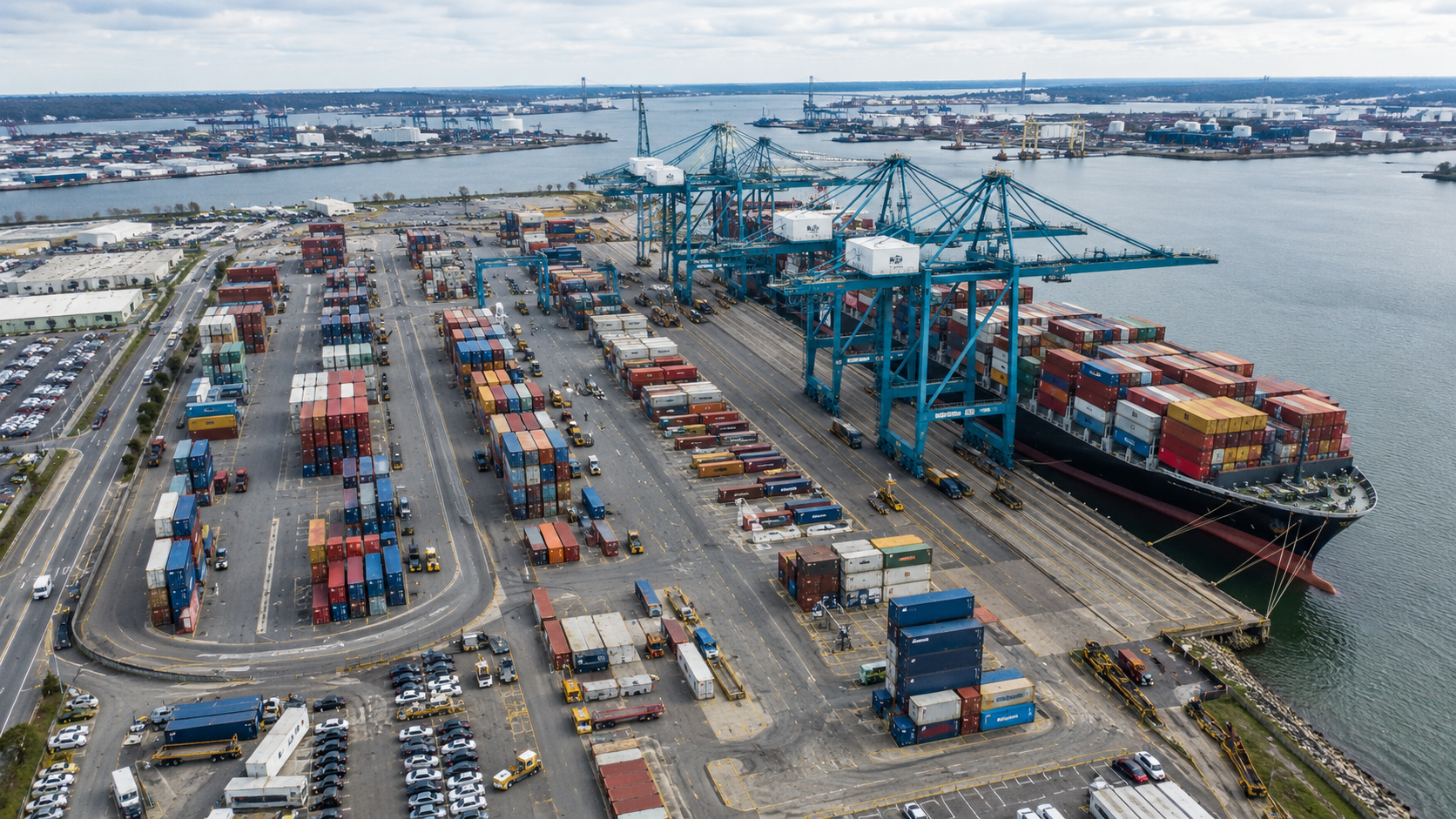
NIT is the Port of Virginia's largest terminal, and if you're moving freight through Hampton Roads, you're probably moving it through here. Most shippers know the name without knowing how the place actually runs — the gate hours, the appointment system, when rail makes sense, where things go sideways if nobody's watching. This is the version with the details that matter.
NIT sits on Hampton Boulevard, a couple miles up from the mouth of the Chesapeake Bay. It's the flagship of the Port of Virginia, deep enough and wide enough to take the largest ships on the water without rerouting them elsewhere. That capability shows up in something shippers actually feel: carriers keep calling here on schedule, week after week, instead of bouncing cargo to a secondary port when a big vessel comes through.
The terminal also runs reefer service at real scale — enough plugs that temperature-controlled freight isn't an afterthought the way it is at smaller facilities. If you're shipping anything cold, that's worth knowing before you book.
None of that tells you how the place runs day to day, though. That's where most of the actual friction lives.
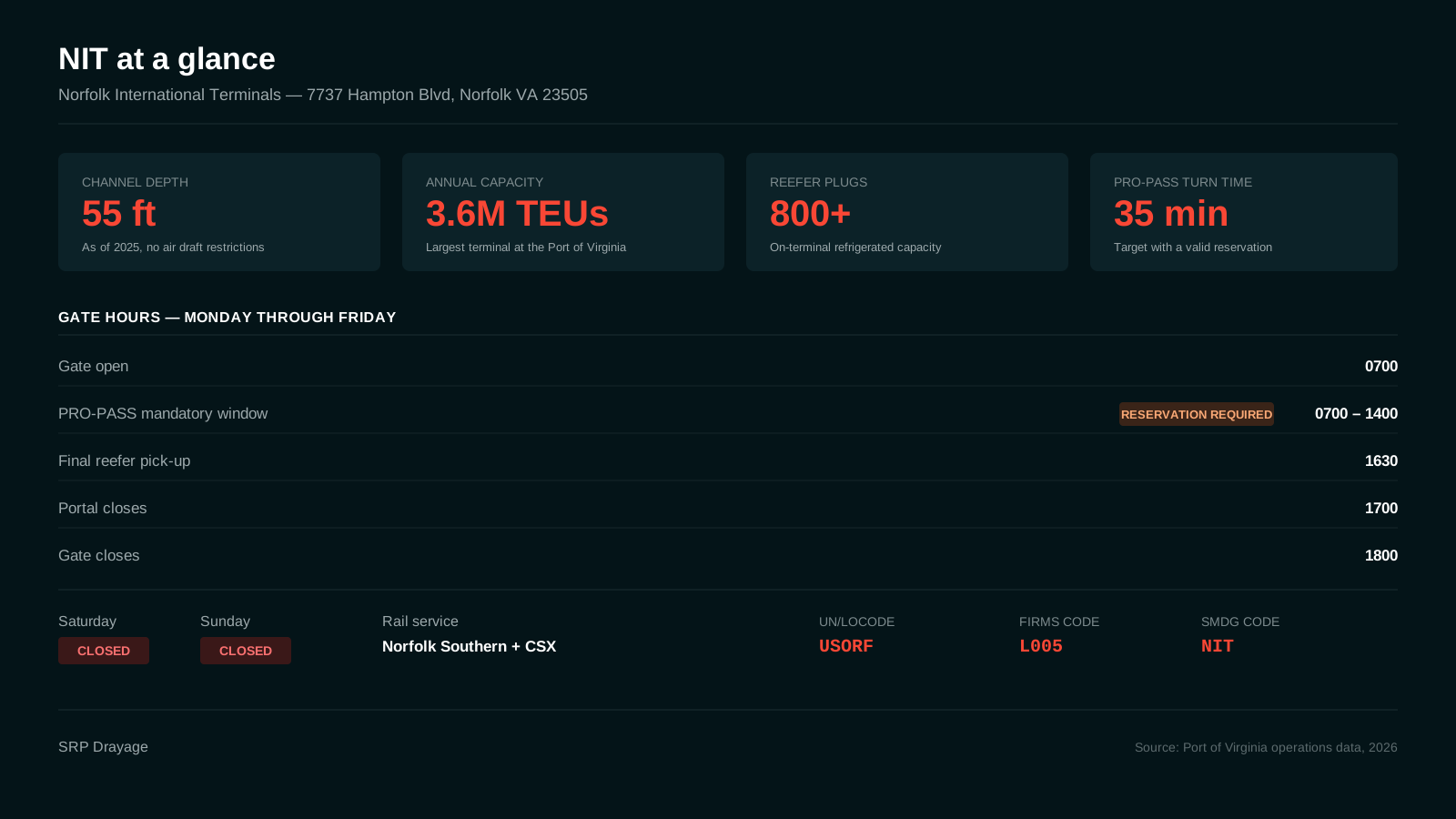
NIT's gates run weekdays, but there's a detail that catches people off guard: the portal — the system that processes your transaction — closes an hour before the physical gate does. Show up after the portal closes and it doesn't matter that the gate's technically still open. You're not getting your container.
Reefers have their own, earlier cutoff. Miss it by even half an hour and a temperature-sensitive box can sit overnight.
Weekends are closed, full stop. No early entry, no exceptions. And because demurrage runs on calendar days, not gate-open days, a container that clears Friday afternoon can rack up two full days of charges before anyone's even allowed back on terminal Monday morning.
The port runs an appointment system called PRO-PASS. During the busiest morning hours, you need a reservation to get in — no appointment, no entry. Outside that window, things loosen up, though that often just shifts the congestion to the afternoon instead of removing it.
For shippers, the part that actually matters isn't the system itself. It's whether your drayage provider has their registration current and an appointment locked in before the mandatory window opens. If they don't, your freight is stuck behind everyone who planned ahead.
NIT connects on-dock to both major eastern rail carriers, and a recent expansion meaningfully increased how much cargo the terminal can move by train each year. For freight headed well inland — past the immediate Hampton Roads region — rail can beat trucking on cost, especially at volume.
It's not always the right call. Rail transit windows flex more than a direct truck move, and tracking gets a layer more complex once a container changes hands at the rail yard. For anything time-sensitive, a straight drayage move usually still wins. For high-volume, longer-haul freight where the per-unit cost matters more than the clock, it's worth asking the question.
NIT sits close to I-64, which is genuinely useful — it's a short run from gate to highway, and that's not marketing language, it's just true. What the brochure version leaves out is that I-64 itself, particularly the stretch near the Hampton Roads Bridge-Tunnel, backs up hard during peak hours.
A driver stuck in that traffic is burning hours you're paying for. The fix is mostly about timing — staging pickups before the morning rush builds or after the evening one clears. A carrier who runs this lane regularly knows the windows without having to guess.
The numbers above only matter if someone's tracking them in real time. A container's last free day doesn't pause for a weekend, and a missed PRO-PASS window doesn't apologize. Knowing the rules is step one. Acting on them before the deadline is the actual job.
The shippers who don't get burned at NIT aren't the ones who memorized every spec. They're the ones whose drayage partner is actively watching the clock — the PRO-PASS window, the reefer cutoff, the weekend closure, the last free day on every container in motion.
We run NIT daily at SRP. We know which morning slots to book to avoid the worst of the Bridge-Tunnel backup, when an afternoon pull makes more sense than fighting for a 7 a.m. appointment, and how to flag a container before its free time runs out on a Friday. That's not a sales pitch — it's just what the job requires if you're doing it right.
Got a container moving through NIT and want a second opinion on the timing? Tell us what you're moving and when, and we'll tell you straight whether your current plan holds up.
Weekdays only. The portal closes an hour before the physical gate does, so plan your last pickup with that gap in mind. Weekends are closed entirely.
During the mandatory morning window, yes — no reservation means no entry. Your drayage provider should have this set up and current well before your container is available; it's not something to sort out the morning of.
Depends on the freight. On-dock service with both major eastern carriers makes inland moves more cost-effective at volume, but it adds time and tracking complexity compared to a direct truck move. Worth asking your provider to run both options if the destination is far enough inland.
Know your container's last free day the moment it's available, and remember the clock runs on calendar days even though the gate doesn't open on weekends. The safest move is pulling before the deadline, not on it.